

Black Clover Just Turned 170 Episodes Into Season One
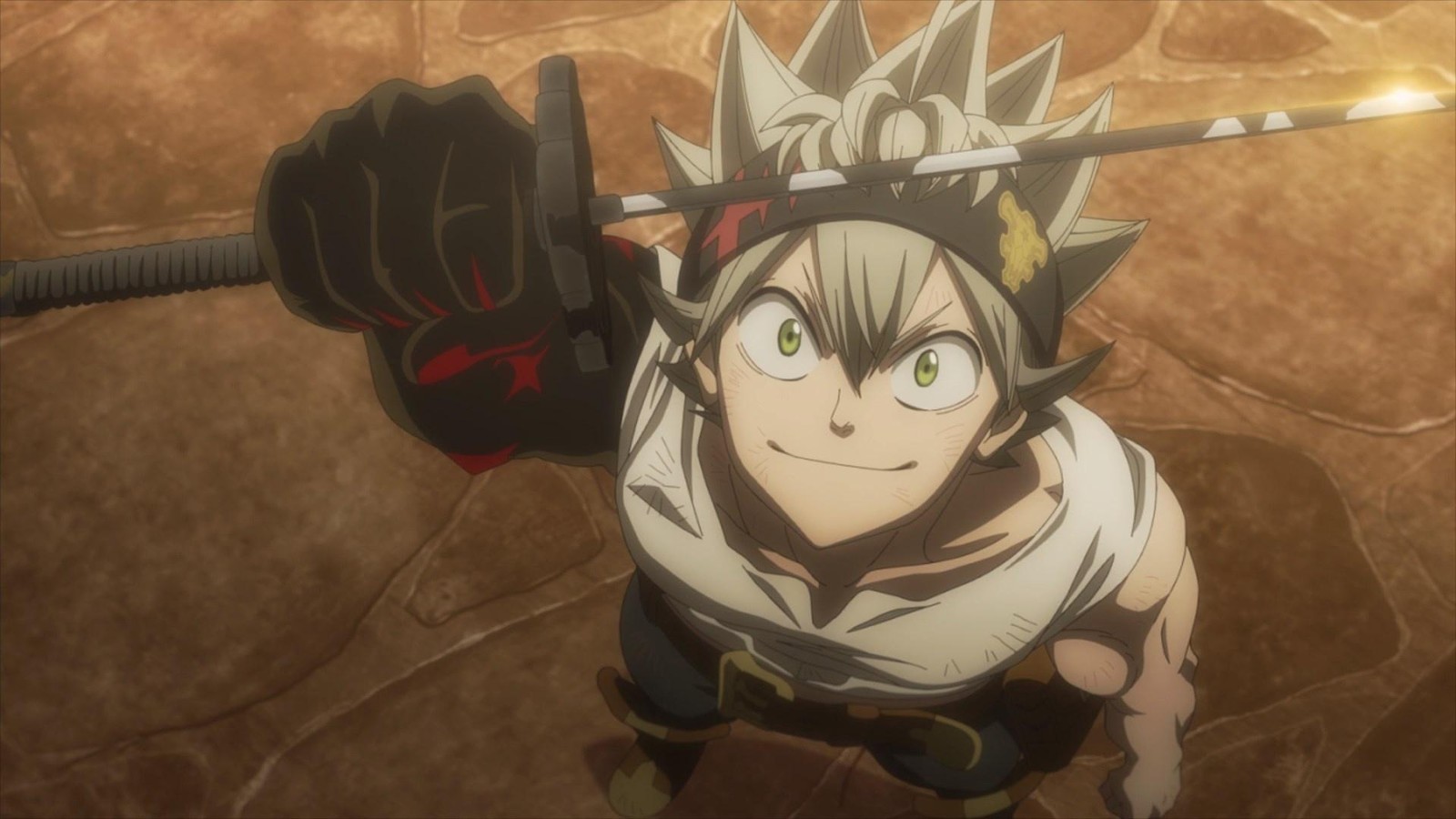
Black Clover returns on 3 October as its 2nd Season, which quietly reclassifies 170 previous episodes as the first one. There are four official ways to count them and they all disagree.
Black Clover comes back on Saturday 3 October at 23:00 on TV Tokyo, and the official site calls it the 2nd Season. Which is a tidy label for something that is not tidy at all, because the run it is numbering as the first went 170 episodes and was never divided into seasons in the first place.
Not "was divided differently." Was not divided. The original aired continuously from October 2017 to March 2021, year-round, with no seasonal breaks in Japan. The seasons everyone refers to are a Western home-video construction — which is why English-language reference sites host standalone articles for a third and fourth season that, in the country where the show was made, did not exist.
Four official numbering systems, all incompatible
Count the same 170 episodes and you can arrive at four different answers, each of them official somewhere:
- One continuous run. The Japanese broadcast — 170 episodes, no divisions, and now retroactively "1st Season"
- Sixteen chapters. The Japanese home-video release numbered the run in Chapters; episodes 155-170 shipped as Chapter XVI
- Four seasons. The Western streaming and home-media split, under which the new run is logically season five
- Two television series. How the reference encyclopedias file it, sidestepping season counting entirely
There is a nice contradiction sitting inside the English-language record on this. The Wikipedia article on the 2023 film places its events "during the fourth season" of the anime — using precisely the seasonal division that its own episode-list article states does not officially exist.
And this is not a case of English coverage inventing something. The retrofit came from Japan: the official site says 2nd Season, and Japanese trade press already describes the returning director as the man who worked on "1st Season" and the film. English outlets mostly followed. The split is between official usage and reference infrastructure, not between countries.
The film is not where the story got to
The most repeated error about the gap is that the story moved to the film and now moves back to television. It did not.
Sword of the Wizard King, released June 2023 in Japanese cinemas and on Netflix worldwide the same day, is an anime-original story — not a manga adaptation, and set earlier in the timeline than where the series stopped, in the six-month gap between two arcs the show had already covered. Tabata was chief supervisor and original character designer; the screenplay was by other hands.
So the new run picks up from episode 170, mid-arc, in the Spade Kingdom material — not from the film. Any sentence describing the film as a bridge is describing something that never happened.
The 11 percent filler figure is doing a magic trick
Black Clover has a reputation as an unusually filler-light shonen adaptation, and the number attached to that reputation is 11 percent. It comes from a fan-maintained filler database, not from Shueisha or the studio, and its own breakdown of the same 170 episodes reads:
- 112 episodes of straight manga canon
- 6 mixed canon and filler
- 18 filler
- 34 "anime canon" — original material made with the author's involvement
Which means about 66 percent of the original run is direct manga adaptation, and roughly a third — fifty-eight episodes — is not. The tidy 11 percent is achieved by excluding those 34 episodes from the numerator, using a category boundary the site invented. Episodes 155 to 157 are an original arc explicitly supervised by Tabata; episodes 142 to 149 are a solid eight-episode original block.
None of this makes the show worse. It makes the statistic a piece of taxonomy rather than a measurement.
The manga finished five months ago
Here is the fact that reframes the entire return, and that a startling amount of coverage is writing around.
Black Clover is over. Tabata ended it on 1 May 2026, publishing chapters 390, 391 and 392 simultaneously in Jump Giga. Anything describing his serialisation in the present tense is describing something that stopped four months before this announcement.
The path there is worth having straight, because it is routinely misreported as a demotion. The manga began in Weekly Shōnen Jump in February 2015, took a three-month break in 2022 to prepare the final arc, ran that arc from August 2022, left the weekly magazine in August 2023, and resumed in the quarterly Jump Giga that December — a schedule change made to pace the ending, not a punishment.
Which means that for the first time in the franchise's history, the adaptation has a finish line in front of it. Whether it intends to reach it, nobody has said.
What the circulation figures show about why this is happening
The commercial argument for reviving a finished manga is visible in the sales curve, and it is blunt:
- March 2021, as the anime ended: 12 million copies in circulation
- June 2023, around the film: 19 million
- September 2025: 24 million
- June 2026: 24.5 million
Seven million added in the two years bracketing the anime's finale and the film. Five and a half million across the three years of quarterly publication that followed. The anime was the engine, and it has been switched off since 2021.
The parts that are actually new
Studio Pierrot returns. Ayataka Tanemura, who took over the back half of the original run and directed the film, directs. Itsuko Takeda is back on character design, Minako Seki on music. Gakuto Kajiwara, Nobunaga Shimazaki, Jun'ichi Suwabe, Kana Yuuki and Hiro Shimono all reprise.
The one significant new hire is Keiichiro Ochi on series composition. WANIMA take the opening; ONE OR EIGHT perform the ending, "Yellow Brick Road."
Nobody has announced how many episodes it runs, which is the only number that would tell you whether "2nd Season" is a genuine structural change or a marketing label attached to another open-ended run. And the premiere date is 3 October — nine years to the day since the original debuted, same date, same network. Whether that is deliberate or not, it makes the retroactive renaming look less like a revival and more like a continuity someone staged carefully after the fact.