


Demon Slayer broke every anime box office record. Chapter two still has no date.
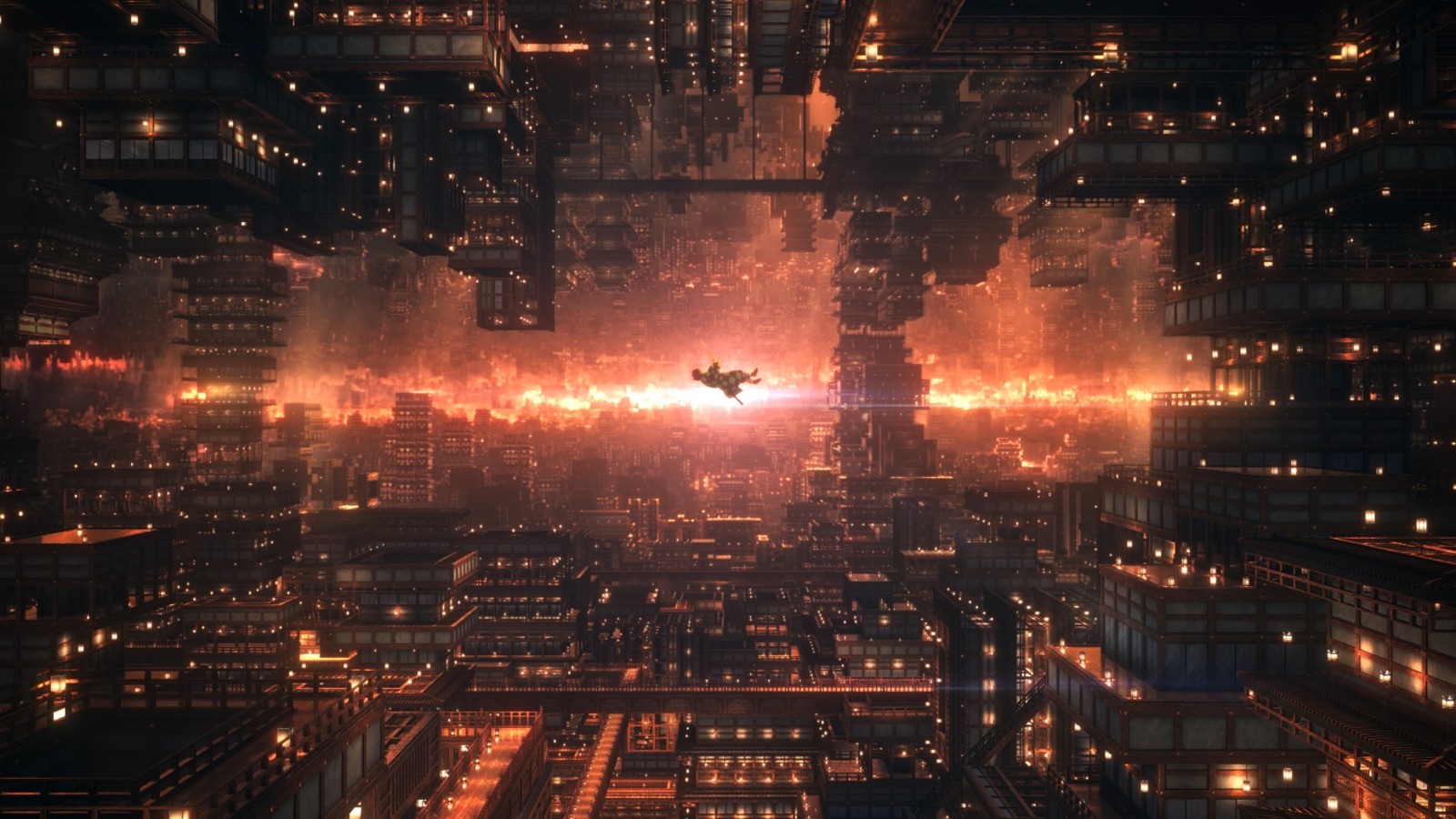
Demon Slayer: Infinity Castle is the highest-grossing anime film ever made and the highest-grossing Japanese film ever made. It has been streaming since July and it won Film of the Year in May. Fourteen months after release, nobody — ufotable, Aniplex, Sony or Crunchyroll — can tell you when chapter two opens.
The film opened in Japan on 18 July 2025 and in North America on 12 September. It has been streaming on Crunchyroll worldwide since 28 July 2026, in seventeen audio languages. It won Film of the Year at the Crunchyroll Anime Awards in May, plus Best Anime Score and five voice-acting awards. It was nominated for a Golden Globe and a Producers Guild Award.
It is also part one of three, and parts two and three have no release date. Not a window. Not a year.
The records, with the caveat the trackers force on you
Box Office Mojo and The-Numbers do not agree on this film, and the gap is not small:
- The-Numbers: $793.5 million worldwide.
- Box Office Mojo: $739.0 million on its all-time chart, $723.2 million on the film's own page.
Call it roughly $740–795 million and cite whichever source you use. The gap between the two — about $55 million — is larger than the entire worldwide gross of Jujutsu Kaisen: Execution, another of 2025's big anime releases. For the highest-grossing anime film ever made, the industry's two standard references are further apart than a rival franchise's whole theatrical run. (Anime measurement has a habit of this — the two biggest seasonal polls cannot agree on who won the summer either.)
The domestic figures are solid and converge at roughly $134.5–136.9 million, including the March 2026 re-release. And the American opening was the story of the autumn: $70.6 million across the first weekend, which broke a twenty-six-year-old record set by Pokemon: The First Movie at $31 million, on 3,315 screens, after a $33 million opening day.
Against the field, on Box Office Mojo's numbers throughout:
- Infinity Castle — $739.0M
- Mugen Train (2020) — $486.5M
- Your Name (2016) — $405.3M
- Spirited Away (2001) — $359.2M
- The First Slam Dunk (2022) — $246.9M
- Suzume (2022) — $221.2M
Rotten Tomatoes: 98% from critics and 98% from audiences. MyAnimeList: 8.65, ranked 87th of all anime.
It broke the record without ever beating the film it replaced at home
This is the detail almost nobody prints. Mugen Train's 40.75 billion yen remains the all-time Japanese box office record. Infinity Castle did not break it.
In dollars the gap looks like a rout — roughly $392.7 million in Japan for Mugen Train against $259.9 million for Infinity Castle, a 34% fall. But the trackers convert Mugen Train's yen at around 104 to the dollar and Infinity Castle's at closer to 148. In yen the two films are far nearer than that. The Japanese box office did not shrink by a third; the yen did.
So the "highest-grossing Japanese film of all time" title was won abroad, and partly on the currency markets.
The franchise conquered America in the years its home market stopped mattering
Mugen Train took roughly 77% of its worldwide gross in Japan. Infinity Castle took about 33% — while nearly tripling its American take, from $50.3 million to $136.9 million, on more than double the screens.
Same director, same studio, same characters, five years apart, completely inverted business. The sequel that broke the American record is the one that stopped needing Japan.
An R-rated subtitled cartoon beat Marvel, and was still only the year's second-biggest animated film
Infinity Castle finished seventh among all 2025 worldwide releases, ahead of The Fantastic Four: First Steps, Thunderbolts, Captain America: Brave New World and Mission: Impossible — The Final Reckoning. It outgrossed Marvel's entire 2025 output with a subtitled, R-rated animated sequel to a television series.
And it was still beaten, by nearly three to one, by Ne Zha 2, which did $2.26 billion — of which just $23.3 million came from the United States, roughly 17% of what Infinity Castle took there. Two animated juggernauts, perfect mirror images. One conquered the West and could not crack China. The other conquered China and never registered in the West.
Sony hired a movie star for the dub. The award went to the working actor.
Six weeks before the American release, the marquee dub announcement was Channing Tatum, billed in Sony's own release as a "Demon Slayer superfan," voicing the minor character Keizo.
When the Crunchyroll Anime Awards handed out Best English Voice Artist Performance in May 2026, it went to Lucien Dodge for Akaza — the character in the film's own subtitle, Akaza Returns. The star got the headline. The specialist got the trophy, and the title.
The 2026 hangover
No anime film appears in the worldwide top twenty for 2026 releases. The highest is Detective Conan: Fallen Angel of the Highway at around $97.1 million, all of it international. Demon Slayer's entire 2026 American contribution was $2.46 million, from the March re-release that added ScreenX screenings.
And the date that does not exist
Crunchyroll chief executive Rahul Purini, to The Hollywood Reporter in September 2025:
"We've announced that it will be a trilogy of movies, but our partners at Aniplex and Ufotable haven't decided on dates yet."
"There's definitely urgency for all of us to bring more Demon Slayer to fans as soon as we can."
Nothing has changed since. The official Japanese and English sites, ufotable's own site, Aniplex's news feed, MyAnimeList and LiveChart all list chapters two and three as undated.
There is one number in circulation, and it should not be. In January 2026 a British newspaper reported that the second and third films would arrive in 2027 and 2029, attributing it to a Crunchyroll executive. Crunchyroll issued a correction stating it had disclosed no such windows and that "anything to the contrary is speculative." The newspaper removed the reference. If you see 2027 attached to chapter two, that is where it came from, and it was withdrawn.
So: the highest-grossing Japanese film ever made, Film of the Year, streaming in seventeen languages, on disc in Japan since 29 July — and the only publication date its sequel has ever had was retracted by the company that was supposed to have given it.