


The Live-Action Akira Ended Without Anyone Cancelling It
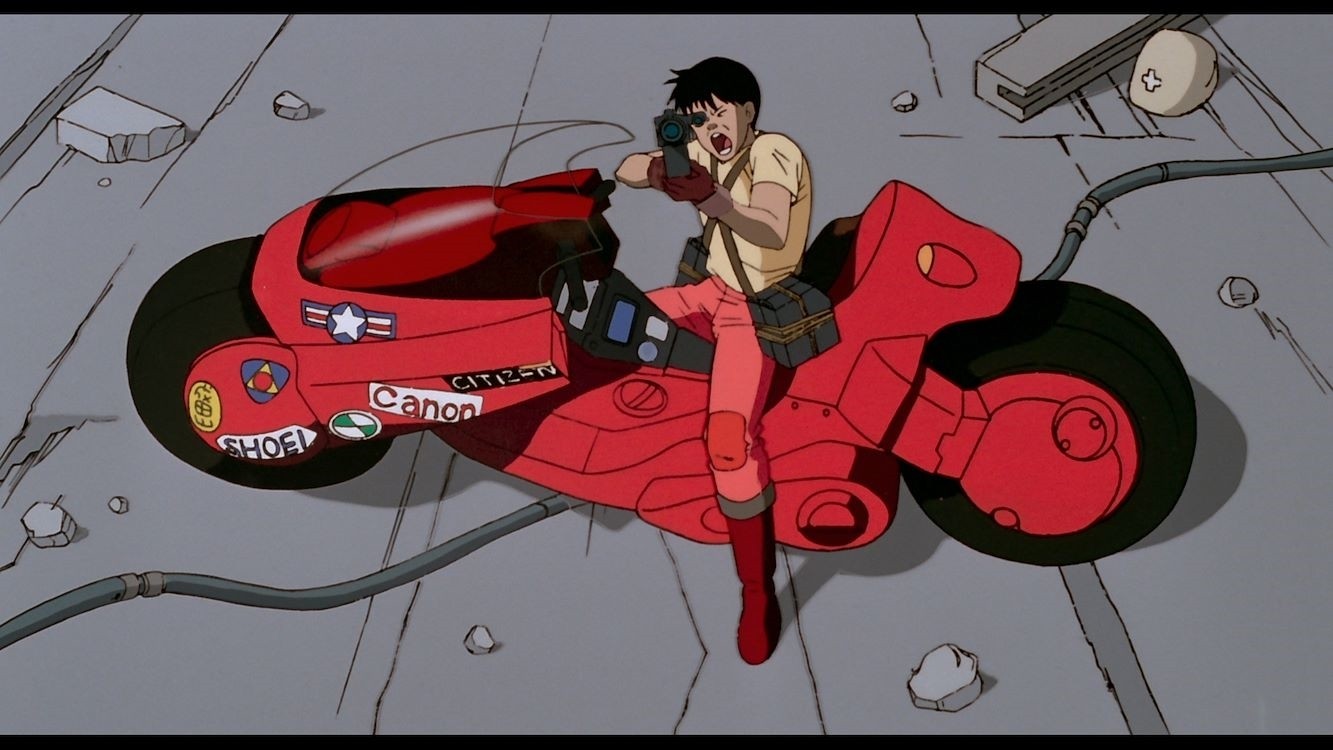
Warner Bros. spent 23 years and eight figures on a live-action Akira and never exposed a frame. Last week the 1988 original out-earned its entire American history in one weekend.
The live-action Akira is dead, and almost nobody noticed how it died. Not cancelled — cancellation requires a decision. In June 2025 Warner Bros. simply declined to renew its option, and the rights went back to Kodansha, where they have now sat for fourteen months with no announced buyer, no director, and no writer.
Twenty-three years. Five directors. At least nine writers. Two shut-down productions. An eighteen-and-a-half-million-dollar tax credit surrendered unused. Spending that the trade press describes as millions, well into the eight figures. Not one frame of film exposed.
Meanwhile, on 4 September, the 1988 film returned to cinemas in 4K and IMAX and took 2.7 million dollars across 787 screens in a weekend — reportedly close to five times what every previous North American release of it had earned combined.
The budget story is being told backwards
The line you will read everywhere, including in the outlet that originally broke it, is that the Vancouver production was shut down in 2012 when the budget reached ninety million dollars. It implies a runaway.
The contemporaneous reporting — same journalist, same publication, January 2012 — says something close to the opposite. Under the Hughes Brothers the budget had been around 180 million. Under Jaume Collet-Serra it had already been cut to ninety. Warner Bros. shut it down because it wanted the film at sixty to seventy million.
So ninety million was not the ceiling that killed it. It was the compromise the studio rejected as still too expensive. The film died going down, not up. The phrasing everyone repeats is a 2025 compression of 2012 reporting, and it reverses the causality.
The director list, in order
Warner Bros. acquired the rights in April 2002 in a seven-figure deal. What followed:
- Stephen Norrington, 2002. Gone within the year
- Ruairi Robinson, 2008-2009. A two-film plan that collapsed
- Albert and Allen Hughes, 2010-2011. Departed after a script leak, citing creative differences
- Jaume Collet-Serra, 2011-2012. Shut down weeks from a Vancouver shoot. Briefly reattached in 2013, then quietly gone
- Taika Waititi, from 2017, confirmed 2019. Never formally exited
The Waititi version is worth dwelling on because it got closest and its collapse was the most banal. It had a release date of 21 May 2021. It had seventy-one scheduled shooting days in California. It had an eighteen-and-a-half-million-dollar state tax credit — the largest of eighteen allocations in that round — against ninety-two million in qualified in-state spending, budgeted for two hundred below-the-line crew, more than five thousand extras, and forty-three million dollars in wages.
In July 2019, Waititi took Thor: Love and Thunder. In December, the film came off the schedule. The credit went unused. He has said nothing publicly about Akira since.
Otomo never blocked anything
The most durable myth about this project is that Katsuhiro Otomo held a veto and kept using it. Its entire source is a single 2017 interview in which he said he had given one major condition — that he had to check and approve the scenario.
In that same conversation he said he was generally fine with whatever they wanted to do with it. He had earlier told one of the screenwriters not to be afraid to change things.
There is no reported instance of Otomo blocking, rejecting or killing any version. Every documented failure traces to a Warner Bros. budget decision or a director's scheduling conflict. Hollywood spent twenty-three years and eight figures failing to make a film whose author had already given it permission to change.
Why the arithmetic was always going to win
The manga is roughly two thousand pages across 120 chapters and six volumes — the narrative mass of a multi-season prestige series. Otomo, adapting his own unfinished work in 1988, solved this by amputation: he cut the back half and invented an ending, while the manga carried on serialising for nearly two more years afterward.
Which means the canonical Akira film is already a compression its own author did not treat as complete. It is exactly why he came back in 2019 promising a new anime that would incorporate the entirety of the manga's story.
Every live-action attempt inherited a fork with no good branch:
- Adapt the manga and you need a destroyed megacity, competing military factions, biker gangs and a psychic body-horror climax — which is what the budget ledger shows. 180 million, cut to 90, with the studio demanding 60 to 70. A seventy-million-dollar Akira is not a smaller Akira. It is a different and worse film
- Adapt the 1988 film and you are remaking a work widely regarded as definitive, in the medium it was made to escape, with nothing to add
The 2011 version is the demonstration case. It solved the budget by shrinking the story and solved the setting by relocating to "Neo-Manhattan" and renaming Tetsuo as Travis. The cheap reading is that Hollywood could not stop whitewashing it. The truer one is that the relocation was a cost-and-casting solution to a scope problem, and it made the film simultaneously cheaper and pointless.
Waititi's plan — the full manga, an Asian and Asian-American teenage cast — was the first to refuse both branches. It never reached a budget conversation.
One casting myth worth retiring
The names actually in negotiation in late 2011 were Garrett Hedlund, frontrunner for Kaneda, and Kristen Stewart, offered the Kei role. Paul Dano, Alden Ehrenreich and Toby Kebbell screen-tested for Tetsuo.
The endlessly circulated claim that Chris Evans was cast as Kaneda and Joseph Gordon-Levitt as Tetsuo appears to originate in fan concept art from around 2008. There is no evidence either was ever offered a role.
Where it all ends up
The rights are with Kodansha. The Sunrise anime Otomo announced at Anime Expo in July 2019 — the one meant to cover the whole manga — has had no substantive update in seven years, and is now dormant longer than it was ever active. In May, Otomo founded his own Tokyo animation studio, built to pass on his methods to a new generation. Its first production has not been identified.
And in the middle of all this, the film he made in 1988 for about five and a half million dollars — released in Japan on 16 July, the exact in-story date the explosion levels the city — went back into IMAX and out-earned its entire American history in three days, exactly as he made it.
The phrasing from inside the Vancouver shutdown in January 2012 remains the most economical summary anyone has produced. Everybody is being sent home.