


10 sci-fi anime you can binge without a single dud
Here's ten sci‑fi anime series for a no-fuss binge, with tight seasons and dubs you can stream.
There’s no shortage of science fiction in anime, but not every series manages to stick the landing episode after episode. If you’re someone who’s spent way too long wanting a sci-fi show that’s actually worth binging from start to finish—without being mugged by filler or forced to sit through thirty episodes of characters screaming about friendship—this list might just sort you out.
I’ve spent four years covering science fiction for MovieWeb, and that’s basically code for: I’ve seen enough anime to know most series will collapse if you push past the shiny world-building. So everything here isn’t just a winner on premise, it’s consistently excellent all the way to the credits.
Gurren Lagann’ launched in 2007 and goes from literal dirt tunnels to fighting with galaxy-sized robots—no, I’m not exaggerating.
Anime That Go Beyond Cool Concepts
First up: Gurren Lagann. Easily written off if you only catch a few minutes—giant robots punch each other while someone yells about drills—but it’s the rare show that just keeps escalating until it’s totally absurd, in the best way. By the end, it’s less about physics and more about human ambition running wild. What’s clever is that, beneath the neon brawling and shouty optimism, the show keeps hammering on grit and belief. If you want absolutely maximalist sci-fi and hate restraint, this will have you running through walls (figuratively, I hope). But if you want subtlety, it’s probably not for you—Gurren Lagann doesn’t even know the word.
Now, if you like your science fiction sprawling and loaded with politics, Legend of the Galactic Heroes (first aired in 1988) is the gold standard. The title is nonsense, but the content isn’t. This is 110 episodes of serious space opera where strategy, diplomacy, and ideology matter just as much as guns. It’s not quick viewing—the length puts most people off—but if you’re willing to dive in, it’s one of the most ambitious stories the medium has ever produced. You’ll need to keep up: it expects you to pay attention, and rewards patience with some of the best political drama in sci-fi.
Then there’s Serial Experiments Lain. Airing before the turn of the millennium, it somehow predicted the identity disasters we all now live with online. Watching Lain today is borderline uncanny: questions it raised in the dial-up era—about anxiety, reality, and the digital world—are even more pressing now. It’s a cryptic, slightly disorienting ride that shows you what anime can do when it stops worrying about answers and just leans into the weirdness. You’ll keep coming back and picking up new threads—if you like neat, event-by-event storytelling, this is probably not your basket.
Big Names Done Right
Look, Neon Genesis Evangelion is never going away, and it shouldn’t. It isn’t just the giant robots—it’s what Hideaki Anno did to the genre’s mood. Most mecha shows are power fantasies. Evangelion turns that inside out: its teenagers are visibly shattered, all while the robot fights double as metaphors for depression and trauma. If you want raw emotion and a story that lurches into introspection (sometimes literally mid-fight scene), Evangelion is unmissable. But if you’re only here for robots hitting each other? The back half might test your patience.
Another high point: Steins;Gate from 2011. Time travel usually collapses once you start prodding at its logic. This show actually cares about its rules—it makes sure the emotional fallout and consequences feel earned. The first few episodes are misleadingly silly, but by the time you notice, the stakes have quietly skyrocketed. It’s a must if you like your science fiction with a side of heartbreak, and you’re willing to endure a slightly slow beginning.
For cyberpunk obsessives, Ghost in the Shell: Stand Alone Complex remains the obvious pick. It takes the brooding, philosophical roots of Mamoru Oshii’s iconic film and riffs on them as a crime series about a cyborg police unit. It should feel like a downgrade, but instead, it’s a near-perfect balance of detective work, ideas about A.I. and humanity, and the occasional spectacular action scene. Most episodes stand alone, which is rare—and oddly welcome—in the age of endless arcs.
The New, the Gritty, the Brilliant
It’s not all retro. Pluto (2023) adapts a corner of Osamu Tezuka’s Astro Boy and turns it into a slow-burn murder mystery about a robot detective. Naoki Urasawa, who wrote the thing, somehow transforms what could have been a simple case-of-the-week affair into a story loaded with mature ideas about grief and what it means to be human (or robot). Expect a genuinely bleak, deliberate pace: every episode feels like its own packed story, and some will absolutely gut you.
Cyberpunk: Edgerunners is way better than a video game tie-in has any right to be. Studio Trigger took the world of Cyberpunk 2077 and built a violent, breakneck miniseries that feels as if it was ripped straight from the grimiest parts of the game (in a good way). Across ten episodes, they manage to tell an emotionally brutal story with a cast that actually sticks in your memory. Be warned: it doesn’t hold back on body horror or downer endings, but it’s easily the best bit of cyberpunk anime the last few years have produced.
On the darker end: Psycho-Pass. This is what happens when someone wonders 'what if the police could arrest you for thinking about committing a crime?' and then decides to make a thriller out of it. The technology-versus-freedom questions are even more relevant now than when it started. Series one is the standout: well-written, morally tangled, with one of the finest antagonists I’ve seen in animated sci-fi.
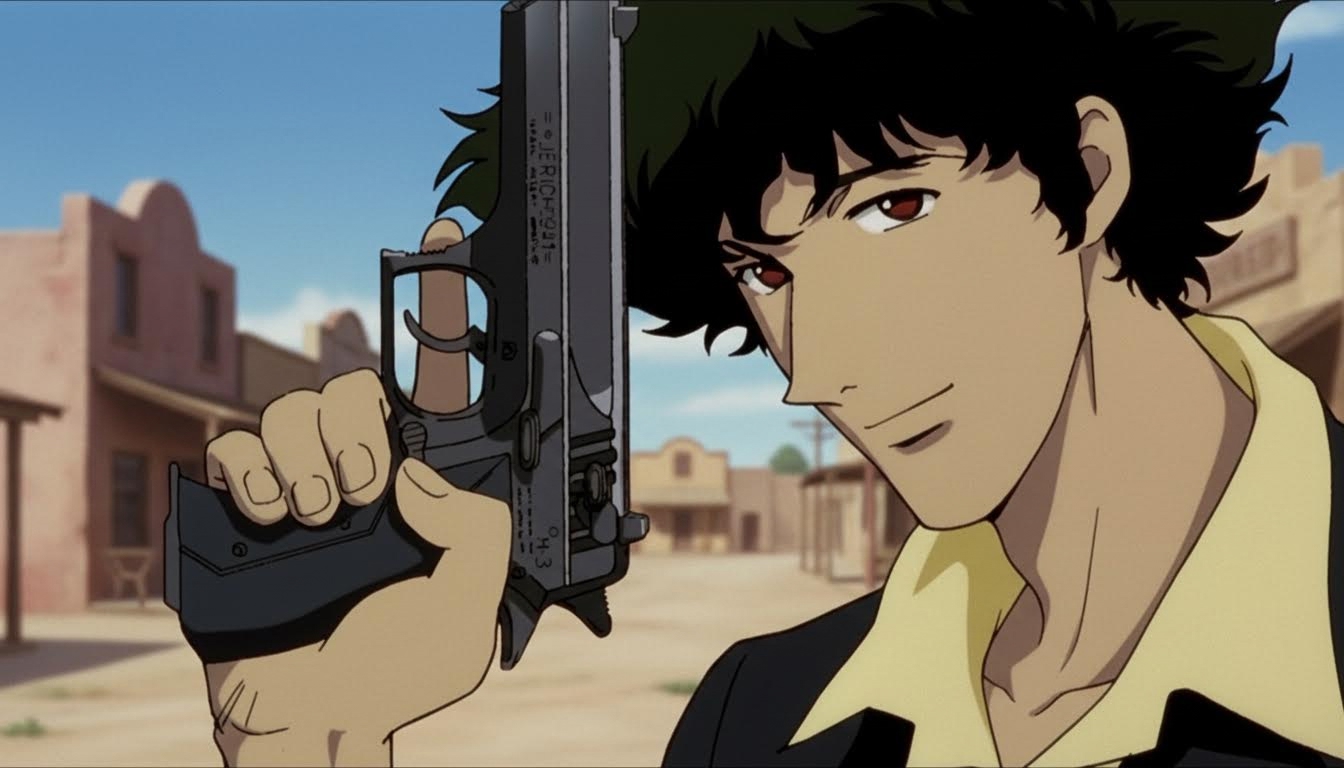
And then there’s Cowboy Bebop, the one show basically everyone agrees belongs on every sci-fi watchlist. Space bounty hunters, jazz, slow-burn heartbreak—Bebop’s got it all. Each episode could stand on its own, but as a whole, it becomes a character study that’s quietly devastating by the end. It’s episodic, sure, but that’s precisely why it works—Bebop manages to genre-jump every week and never loses its footing.
- Gurren Lagann (2007): Over-the-top mecha battles that turn into a full-on celebration of human will.
- Legend of the Galactic Heroes (1988): 110 episodes of meticulously plotted political war in space.
- Serial Experiments Lain (1998): Surreal, prescient, and full of questions about how we live online (and off).
- Neon Genesis Evangelion (1995): Psychological drama disguised as a robot show.
- Steins;Gate (2011): Time travel with actual consequences and emotional payoff.
- Ghost in the Shell: Stand Alone Complex (2002): Intelligent cyberpunk married to a detective format that actually works.
- Pluto (2023): A robot detective’s slow, agonising battle with grief and prejudice.
- Cyberpunk: Edgerunners (2022): A surprisingly brilliant, compact cyberpunk tragedy for the Netflix era.
- Psycho-Pass (2012): Police procedural in a world where crime is predicted before it happens.
- Cowboy Bebop (1998): Unparalleled genre-mashup, cool jazz, space bounty hunting, and a big slice of existential dread.
If you’ve got a sci-fi anime you think should be here, suspiciously missing from the list, drop it in the comments—there’s always room for a bit of friendly disagreement. And if you spot a mistake, you know the drill—inbox is always open.