


Roujin Z Is Back in 4K, and Katsuhiro Otomo Did Not Direct It
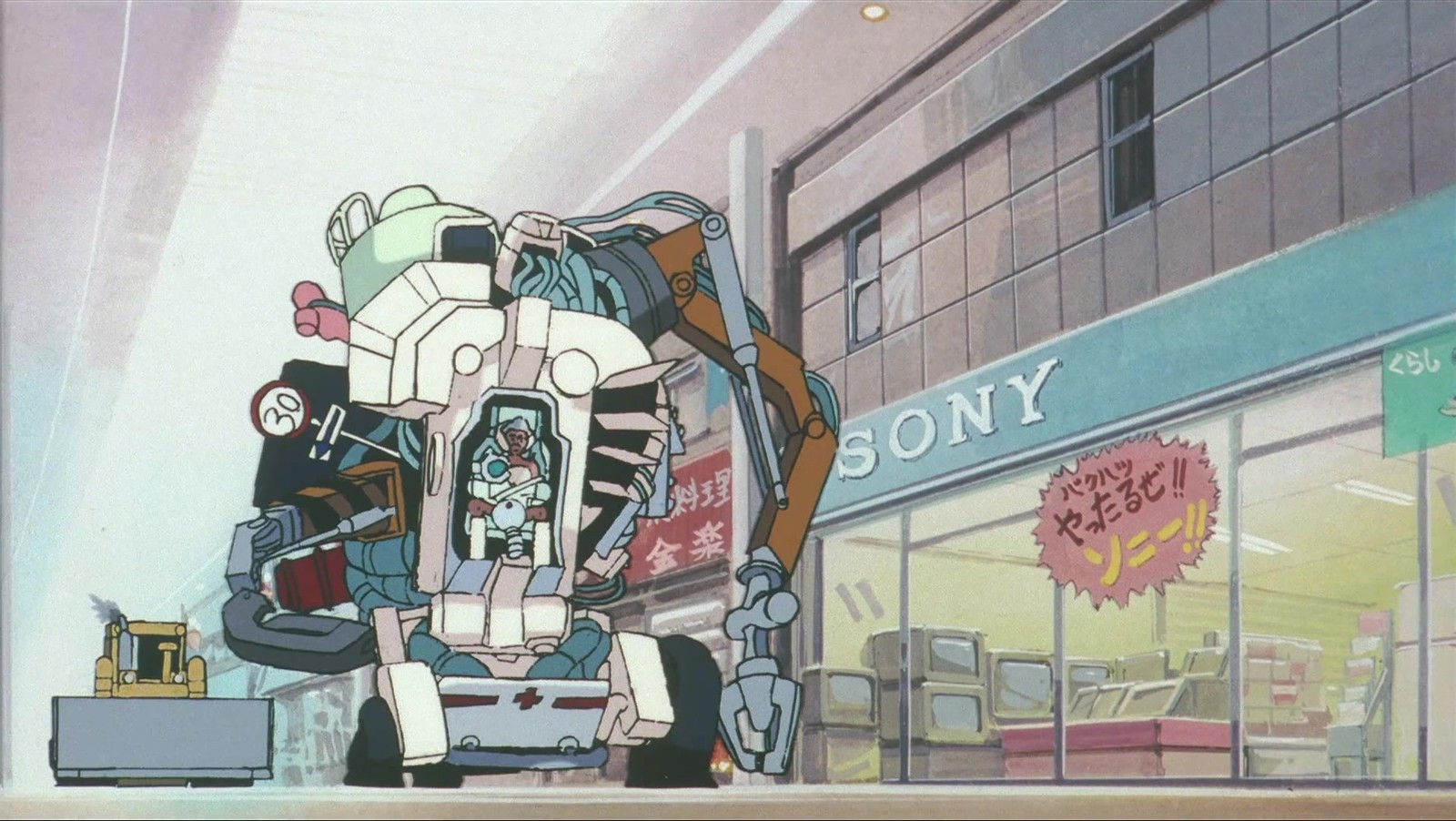
Roujin Z returns in 4K on 18 December, and the English-language write-ups will call it Katsuhiro Otomo's film. The Japanese announcement bills three names, and Otomo's is not the one next to 監督.
The 4K restoration of Roujin Z was announced on 20 September for a one-week run in December. The Japanese copy bills it the way it has always been billed: 大友克洋 × 江口寿史 × 北久保弘之. Three names, in that order, with the director's at the end.
English coverage will compress that to "Katsuhiro Otomo's Roujin Z," because Otomo is the name that sells, and because Akira trained everyone to assume he directed anything with his name on it.
The credit block, as announced
- 原作・脚本・メカニックデザイン — Katsuhiro Otomo (original story, screenplay, mechanical design)
- 監督 — Hiroyuki Kitakubo (director)
- Hisashi Eguchi on the character designs
Otomo wrote it and designed the machine. He did not direct it. Kitakubo did, at thirty, five years before he made Blood: The Last Vampire.
One wrinkle worth knowing if you are quoting the Japanese: some outlets give Eguchi as キャラクターデザイン and others as キャラクター原案, which is closer to original character concept. "Character designs by Hisashi Eguchi" is supported either way; the exact Japanese credit is not settled between sources.
The screening
- Friday 18 December 2026, one week only, at Theatre Shinjuku in Tokyo and Theatre Umeda in Osaka.
- Nationwide from spring 2027.
- Part of Tokyo Theatres' 80th-anniversary programme — by one account the third instalment of it.
- The official teaser spells the whole thing out in its own title: 2026.12.18 (Fri), Theatre Shinjuku and Theatre Umeda, one week limited, nationwide spring 2027.
The 1991 film
- Released 14 September 1991. Eighty minutes.
- Won the Animation Film Award at the 46th Mainichi Film Concours.
- Premise: an experimental hospital bed with an onboard AI, assigned to a bedridden pensioner, which grows a mind and then a body and then goes through Tokyo.
- Original distributor was Babit — not Tokyo Theatres, which handles the restoration. Do not merge the two.
What is not confirmed
- Whether the 4K master came from the original negative. None of the announcements name a source element, a scan resolution, or an audio remix. Anyone writing "scanned from the original negative" is filling in a blank.
- The animation studio. A.P.P.P. is the studio commonly credited and appears on one film database, but no 2026 announcement names a studio at all. Hedge it.
- Any box office figure. Japanese theatrical earnings in 1991 were reported as 配給収入, distributor income, not 興行収入 — and no 配給収入 figure for this film surfaced anywhere. It is better to print nothing than to attach a modern gross metric to a 1991 release.
- The restoration's runtime, rating, and the theatre count for the spring rollout.
1991 was a strange year to make this film
Japan's animation industry in 1991 was three years past Akira and deep into a period where every serious production was being asked to be the next one. Roujin Z went the other way: a small film, an eighty-minute running time, a premise built out of an ageing population and a health ministry rather than out of psychic children and a ruined city.
It won the Mainichi animation prize and then spent three decades as the film enthusiasts recommend to people who think they have finished with Otomo.
The joke that has aged strangely is the machine itself. The Z-001 is sold as a solution to elder care: a bed that feeds, washes, medicates and entertains its occupant without a human ever entering the room, and which its ministry sponsors describe in the language of dignity. The film's position is that nobody asked the man in the bed.
Japan's population was 12 percent over 65 when the film came out. It is roughly thirty percent now. Very little in the script needed updating; the restoration is the only thing being modernised.
What a 4K restoration actually changes, and what it doesn't
For cel animation of this period, a restoration is mostly a scan and a clean: the artwork exists at a fixed resolution on physical cels and 35mm negative, and a 4K pass recovers line detail and colour that prints and home video lost, rather than inventing anything.
Which is why the unanswered question about the source element is not a technicality. A scan from an original negative and a scan from an interpositive produce visibly different films, and the announcement says neither.
The December run is one week in two cinemas. The wide release is five months later, in spring 2027, on a theatre count nobody has published.
Why the credit matters more here than usual
Roujin Z is the film people reach for when they want to argue that Otomo is a satirist as well as a stylist — the elder-care system, the ministry, the nurses' union, the machine that will care for you whether or not you consent. All of that is in the script, and the script is his.
The reason it plays as comedy rather than as a lecture is a directorial choice, and that choice belongs to Kitakubo. Collapsing the two into one name erases the half of the film that makes the other half bearable.
Thirty-five years on, a story about a health system solving old age with an unasked-for machine is going back into cinemas. It will be written up under one name. There were three.